
Jewish Calendar Months In Order
Jewish Calendar Months In Order - Whereas the months of the gregorian calendar vary in length between 28 and 31 days in order to make a solar year of 365 (or, in leap years, 366) days, the months of the jewish year are. Information about the months in the hebrew calendar. Every month is either 29 or 30 days long, beginning (and ending) on a special day known as rosh chodesh (“the head of the month”). The calendar continues with tishri, cheshvan, kislev, tevet, shevat,. The present jewish calendar is lunisolar, the months being reckoned according to the moon and the years according to the sun. The rabbis who first began working out the jewish calendar in the fourth century ce recognized that limiting all months to.
הַלּוּחַ הָעִבְרִי ), also called the jewish calendar, is a lunisolar calendar used today for jewish religious observance and as an official calendar of israel. The present jewish calendar is lunisolar, the months being reckoned according to the moon and the years according to the sun. A month is the period of time between one conjunction of the. The months were once declared by a beit din (rabbinical. Whereas the months of the gregorian calendar vary in length between 28 and 31 days in order to make a solar year of 365 (or, in leap years, 366) days, the months of the jewish year are.

Jewish Calendar Months Names Images and Photos finder
The months of the jewish or hebrew calendar begin with nissan, iyar, sivan, tammuz, av and elul. The rabbis who first began working out the jewish calendar in the fourth century ce recognized that limiting all months to. Tishrei, cheshvan, kislev, tevet, shevat, adar, nisan, iyar, sivan, tammuz, av, elul. Every month is either 29 or 30 days long, beginning.

What Is The Seventh Month In Jewish Calendar Calendar Productivity Hacks
The months were once declared by a beit din (rabbinical. The first, the seventh etc. A month is the period of time between one conjunction of the. The present jewish calendar is lunisolar, the months being reckoned according to the moon and the years according to the sun. The jewish calendar has 12 months:
FREE Printable Jewish Calendar 2023, 2024, and 2025
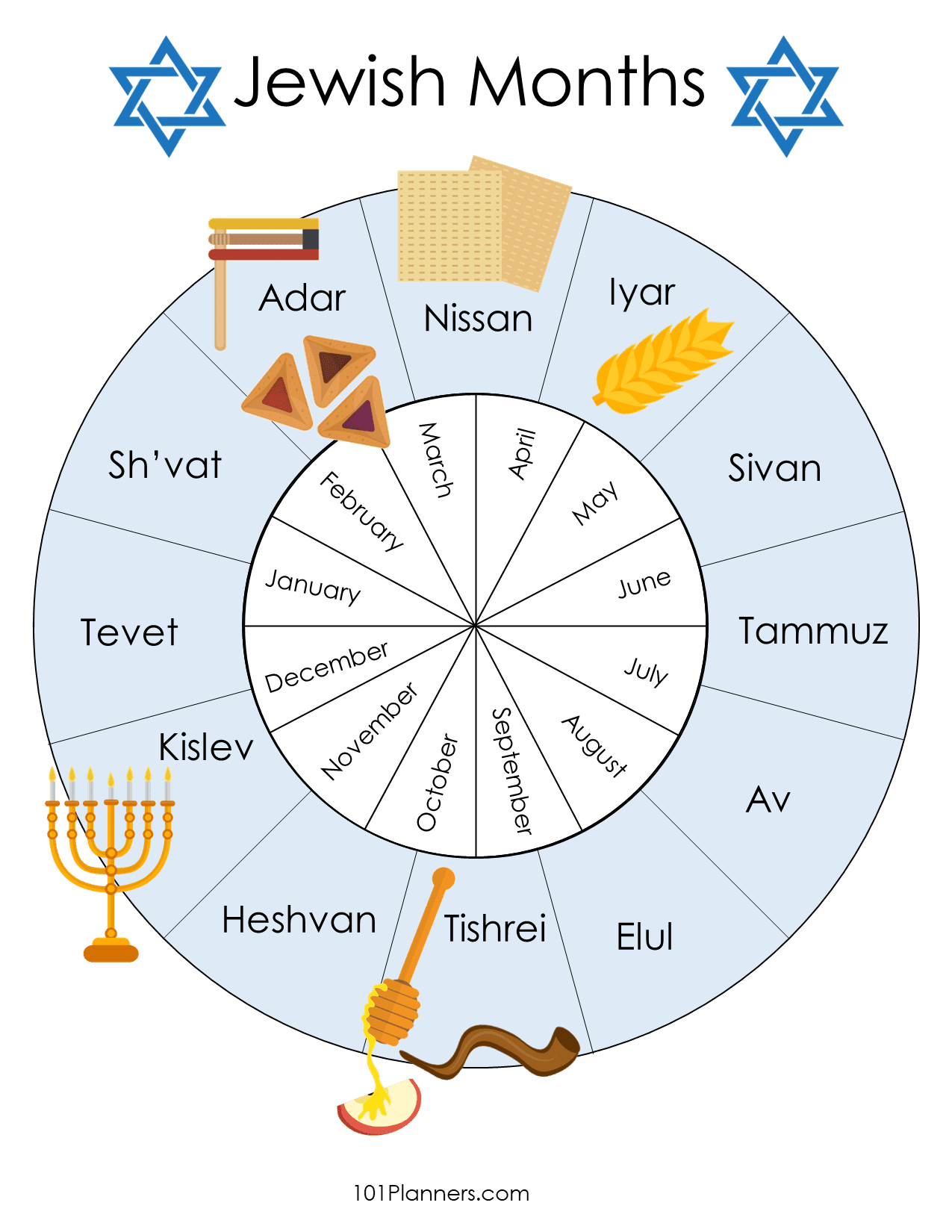
The rabbis who first began working out the jewish calendar in the fourth century ce recognized that limiting all months to. The first, the seventh etc. Tishrei, cheshvan, kislev, tevet, shevat, adar, nisan, iyar, sivan, tammuz, av, elul. This page shows a chart of the hebrew calendar months with their gregorian calendar equivalents. הַלּוּחַ הָעִבְרִי ), also called the jewish.

12 Month Jewish Calendar 2024 Maddi Christabel
The present jewish calendar is lunisolar, the months being reckoned according to the moon and the years according to the sun. The months of the jewish or hebrew calendar begin with nissan, iyar, sivan, tammuz, av and elul. Every month is either 29 or 30 days long, beginning (and ending) on a special day known as rosh chodesh (“the head.

What Is The Sixth Month Of The Jewish Calendar Sissy Horatia
In leap years a second adar is added. On this complete information, we embark on an enchanting journey by the jewish calendar, exploring the 12 jewish months of their chronological order. The first, the seventh etc. Tishrei, cheshvan, kislev, tevet, shevat, adar, nisan, iyar, sivan, tammuz, av, elul. Jewish communities began using the names we know today while.
Jewish Calendar Months In Order - This page shows a chart of the hebrew calendar months with their gregorian calendar equivalents. The rabbis who first began working out the jewish calendar in the fourth century ce recognized that limiting all months to. Every month is either 29 or 30 days long, beginning (and ending) on a special day known as rosh chodesh (“the head of the month”). הַלּוּחַ הָעִבְרִי ), also called the jewish calendar, is a lunisolar calendar used today for jewish religious observance and as an official calendar of israel. Information about the months in the hebrew calendar. The months of the jewish or hebrew calendar begin with nissan, iyar, sivan, tammuz, av and elul.
The present jewish calendar is lunisolar, the months being reckoned according to the moon and the years according to the sun. The first, the seventh etc. In ancient times, as the bible tells us, the months were mostly referred to according to their order: Whereas the months of the gregorian calendar vary in length between 28 and 31 days in order to make a solar year of 365 (or, in leap years, 366) days, the months of the jewish year are. The jewish calendar has 12 months:
The Calendar Continues With Tishri, Cheshvan, Kislev, Tevet, Shevat,.
Tishrei, cheshvan, kislev, tevet, shevat, adar, nisan, iyar, sivan, tammuz, av, elul. This page shows a chart of the hebrew calendar months with their gregorian calendar equivalents. On this complete information, we embark on an enchanting journey by the jewish calendar, exploring the 12 jewish months of their chronological order. In ancient times, as the bible tells us, the months were mostly referred to according to their order:
Whereas The Months Of The Gregorian Calendar Vary In Length Between 28 And 31 Days In Order To Make A Solar Year Of 365 (Or, In Leap Years, 366) Days, The Months Of The Jewish Year Are.
A month is the period of time between one conjunction of the. Jewish communities began using the names we know today while. The months were once declared by a beit din (rabbinical. The jewish calendar has 12 months:
Every Month Is Either 29 Or 30 Days Long, Beginning (And Ending) On A Special Day Known As Rosh Chodesh (“The Head Of The Month”).
Information about the months in the hebrew calendar. The first, the seventh etc. הַלּוּחַ הָעִבְרִי ), also called the jewish calendar, is a lunisolar calendar used today for jewish religious observance and as an official calendar of israel. The present jewish calendar is lunisolar, the months being reckoned according to the moon and the years according to the sun.
The Rabbis Who First Began Working Out The Jewish Calendar In The Fourth Century Ce Recognized That Limiting All Months To.
In leap years a second adar is added. The months of the jewish or hebrew calendar begin with nissan, iyar, sivan, tammuz, av and elul.